AREA Ruhr Roundtable Discussion
“Takaichi Time in Tokyo.
The New Japanese Leadership and Its Relations With Its East Asian Neighbors”
Date: Friday, 29 May 2026, 10 am – 12 pm, CEST
Venue: AREA Ruhr, University of Duisburg-Essen, Duisburg Campus, SG 183, Geibelstr. 41, 47057 Duisburg
Panelists:
Prof. Richard COOK, PhD., Associate Professor of International Relations, Nankai University PR China
Prof. Hyung-Gu LYNN, PhD, AECL/KEPCO Chair in Korean Research, Department of Asian Studies, University of British Columbia, Canada
Prof. em. Brantly WOMACK, PhD, Professor of Foreign Affairs emeritus, Department of Politics, University of Virginia, USA
Prof. Lin-Chun WU, PhD, Professor of History, Department of History, National Taiwan Normal University, Taiwan
Dr. Kerstin LUKNER, Managing Director AREA Ruhr (AREA Ruhr, University of Duisburg-Essen)
Moderator: Prof. Axel KLEIN, Professor of Social Sciences of East Asia/ Japanese Politics (AREA Ruhr/IN-EAST, University of Duisburg-Essen)
Only days after assuming her new position, Japan’s new Prime Minister, Takaichi Sanae, found herself in troubled diplomatic waters. She immediately drew criticism from the PRC when she commented on Tokyo’s likely military response to a Taiwan contingency. While this latest wound in the relationship between the two countries has yet to heal, North Korea continues its missile tests. However, what may be the biggest issue for Japan is the erratic behavior of the White House. Takaichi’s attempts to control Trump by showering him with praise and affection have not stopped the U.S. president from criticizing Japan for not supporting U.S. military efforts in Iran. Additionally, Russia’s invasion of Ukraine has accelerated discussions about the necessity of changing Japan’s security and defense policies, and Japan has already begun adjusting its low-key military posture.
Following the Prime Minister’s landslide victory in an early February 2026 snap election, her Liberal Democratic Party now holds a two-thirds majority in the Lower House of the Diet, giving her government significant flexibility to shape Japan’s security policy in the years to come.
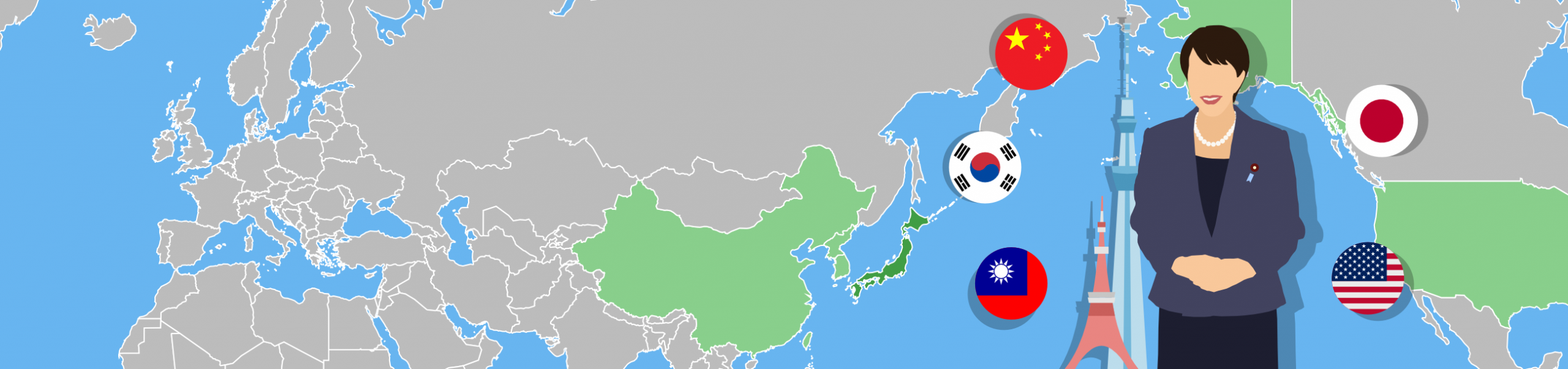
Against this backdrop, the AREA Ruhr Roundtable Discussion will focus on the state of Japan’s relations with its neighbors, focussing on Taiwan, the People’s Republic of China (PRC), and South Korea. The discussion will among others address the following questions:
- How does Japan view its current relations with neighboring countries, as well as the potential for conflict and/or cooperation at the regional level?
- How do Japan’s neighbors view their current relations with Japan, as well as the potential for conflict and/or cooperation at the regional level?
- What are Japan’s and its neighbors’ stances on a possible Taiwan contingency and their own involvement, and why?
- How does the White House’s approach to foreign policy influence bilateral and multilateral interactions in East Asia?